
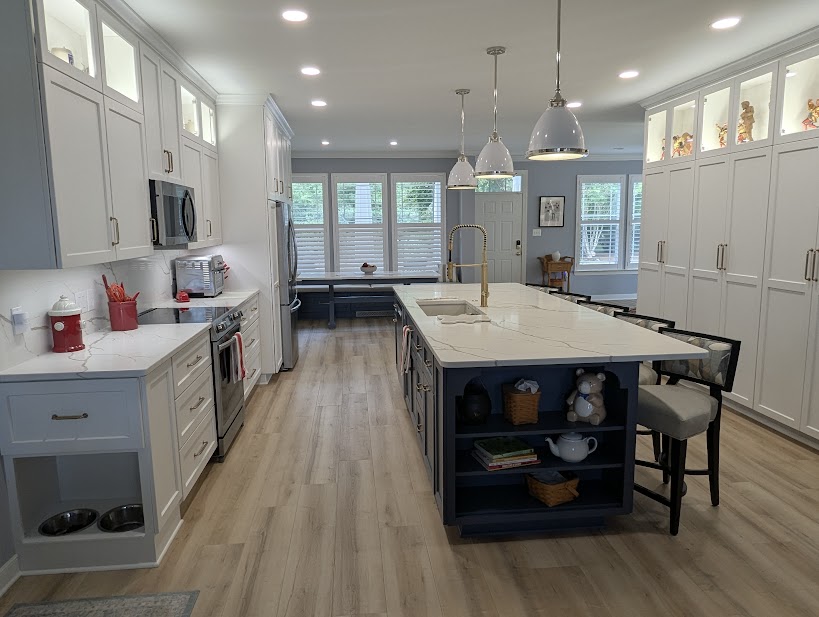
A kitchen island doesn’t become the focal point by accident. It has to earn that position.
Walk into any kitchen and notice where your eyes go first. If your island blends in, something is surely off. Instant attention means the design works. Flashy size doesn’t equal quality. Your decisions have to be deliberate.
Making your kitchen island the focal point is nothing too hard. You just have to choose the right surface material, go for intentional contrast and proportion, and keep everything around it from getting in the way. Get these things right, and the island stops being just another countertop. It’s what makes the kitchen tick.
What Is a Standout Kitchen Island?
A standout kitchen island is something that stands apart with a clear purpose, never blending in.
Most kitchens today repeat the same materials throughout. That creates cohesion, yes, but it also flattens everything. Nothing leads. A focal-point island breaks that pattern with intent.
That break can come from material, color, edge profile, or even how the slab is oriented. It’s not a contrast for the sake of it. It is pretty much a controlled distinction (just enough to make the island feel like the room was built around it).
The base has a role to play, too. A contrasting cabinet finish under the island helps add depth and separation. When the base blends in, the island becomes blandly basic.
How Can You Turn Your Kitchen Island into the Focal Point?
No single move does it. There’s a compact decision flow, where each step adds up:
- Step 1: Pick a surface that carries the visual weight. The countertop does most of the work. Options like quartz or quartzite countertops and granite countertops bring natural movement and, of course, presence. To maximize the impact, a waterfall edge runs the slab over the side in one clean drop. This adds structure and mass that a flat edge simply doesn’t. Slab orientation changes how the island reads. Running veins lengthwise or bookmatching the pattern makes the surface feel more considered and visually anchored.
- Step 2: Use contrast and proportion intentionally. If the perimeter counters are understated, the character lives in the kitchen island. A deeper tone or bolder pattern in custom kitchen countertops anchors the room in a way that is impossible to mimic for a neutral surface. A thicker slab profile or a wider overhang reinforces that. People tend to feel intentional proportions even when they’re not noticing those details consciously. Sharper edges/mitered finishes add a refined touch that elevates a simple island to premium status.
- Step 3: Everything else should support it. Things like cabinets, backsplash, and flooring have to back the focal point, not battle it. When all is loud, nothing pops. Besides, you’ve got to take the lighting aspect seriously. Pendant lights frame the island and pull focus to it. Without them, even strong countertops can lose presence. Add stools to change the island from a mere prep space to a spot where people gather.
These decisions are never random. They work together to make the island the room’s standout feature. Also, keep the surface controlled. Too many items break the visual impact. A clean island lets the material, shape, and detailing do their job without any distraction.
Why Is the Kitchen Island So Important?
The kitchen island is where the kitchen actually gets used. It sees cooking, serving, morning coffee, casual conversations, and whatnot. All of it happens here, not at the perimeter counters.
When the island is visually strong, the whole kitchen organizes around it. The layout feels purposeful. There’s a clear center. Without that, a kitchen is bound to feel scattered, no matter how well-equipped.
NKBA states the island acts as the core work zone and visual anchor. It has to blend function and flow cohesively in the space.
Seam handling affects how premium the island feels. If the joints are clean and placed well, the surface looks continuous. On the other hand, visible or poorly aligned seams break the visual impact right away.
A strong island also gives the eye somewhere to land. That matters more than most people realize.
Benefits of a Well-Designed Kitchen Island
A kitchen island that’s been designed with intent is not only for aesthetic pleasure. It simplifies your life:
- Stronger Visual Anchor- The kitchen feels more structured and less fragmented.
- Better Premium Material Use- Surfaces, such as quartz or granite kitchen countertops, earn the focus without much effort.
- Optimized Space Balance- The island (if designed thoughtfully) links different parts of the room. These include cabinets, appliances, and open areas.
- Higher Design Impact- One standout feature done well beats a bunch of average ones every time.
- More Functional Presence- A visually strong island instinctively draws people to cook, work, and gather.
- Timeless Appeal- Trends will come and go. But an island built around quality material and clean proportions doesn’t date. It holds up for decades because it was never chasing a moment in the first place.
How to Pick the Right Kitchen Island Design Approach?
Start with what the kitchen already is.
A minimal space gives the island room to carry more texture or pattern without overdoing it. A kitchen already rich in detail needs an island that’s refined rather than busy.
Material pick matters the most here. Quartz countertops, quartzite, or granite must suit your kitchen. Plus, it should endure nonstop daily use. A surface that looks great but marks easily is the wrong call.
Custom kitchen countertops give you control over thickness, edge profile, and finish. You can’t expect that from stock options.
The target is not a louder island. It is a clearer one.
FAQs
Are quartz countertops similar to quartzite ones?
No, quartz is engineered. Ground stone mixed with resin, consistent, and low-maintenance, that’s what quartz basically is. Quartzite is a natural stone, quarried directly, with more variation and a different upkeep profile. These two differ in looks, performances, and even price points.
How long is the kitchen island countertop installation process?
A standard installation can wrap up in a few hours. Custom countertops, especially waterfall countertops with mitered seams, take longer. The extra time comes from fabrication and the precision involved in fitting.
What is the cost of a kitchen island countertop?
It is reliant on a few things specifically. Material, size, detail, etc., matter. Quartz and granite countertops are usually the more accessible options. Quartzite countertops and custom work cost more. And that’s normal because of the quality and labor involved.